
After we learned in the last post why you should start locking your content I want to get into more detail how this might look in practice before I show you in the last post what I did with my blog so you can do the same.
The only way to stop AI companies scraping your content is to lock out everybody but real users from your own website while at the same time stopping to produce content for free on platforms like YouTube, X, Facebook etc.
This is easier said than done because we are so used to the way things are like almost 20 years.
So this comes at a cost, but also has its benefits. Let me explain.
First we are talking about your website. I assume we are talking here about a content driven website like a blog for example, something that’s actually worth scraping for AI companies. If you have a website for your plumbing business, there’s most likely not much to protect from scrapers.
To stop AI companies from scraping your content you could start blocking them on a webserver level, by .htaccess for example. But this would block search engine crawlers like those from Google completely and you would also need to keep up with the latest AI scraper bots. That’s not what we want.
The most viable option…
… is to let users register for free if they want to read your content while showing a locked screen to everybody not logged in.
Here’s a screenshot from my blog how this looks:
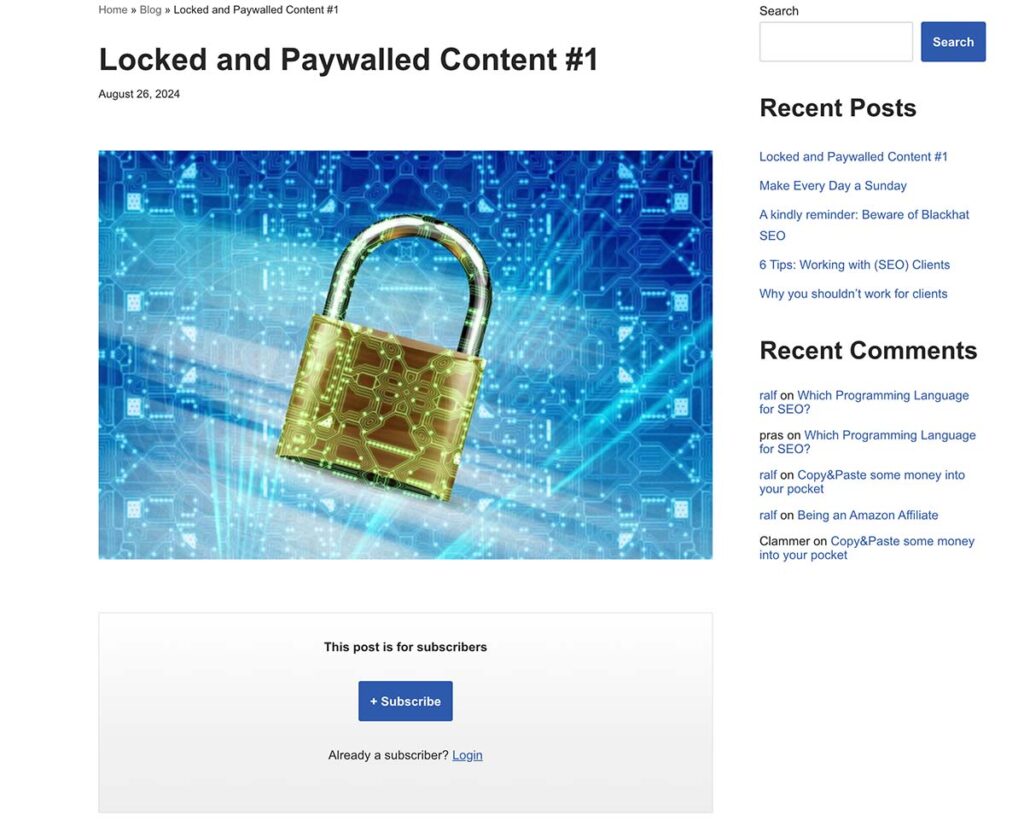
This has two benefits:
Separating the doers from the leechers
First of all it requires a user to take at least a little bit of action. The web today is full of ‘leechers’, people who consume mindlessly, looking for shortcuts, never being dedicated to something. You don’t need such readers and you don’t want to waste your time by answering comment of such people.
By registering for an account they show at least enough dedication to the topic that they took that minute to register. So with the people now reading your blog, you can be sure that they really want to read your blog.
Your visitor stats all of a sudden became significant 🤡
Building a relationship through email
The second benefit is they gave you their email address, which is a form of trust. They trust you enough that they at least gave you their email address. You can combine that with adding them to your email list, and deepen the relationship with them through an email sequence you send.
We don’t want to spam them, but I’m sure you run your blog because you have something to offer that’s not free, something you want to sell.
Maybe they aren’t aware of that, maybe they aren’t even aware of the problem your offer is solving. You can raise that awareness through an email and offering your solution in the next. Again, you don’t want to spam them. Your content attracted them for a reason and they might be interested in what you have to offer as well, because it helps them in their business. Win-Win. I think you got the idea.
One step further
Depending on how much content you are producing and how deep it goes you might think about making some posts paid. I don’t want to get too far off the topic of this post, but people normally buy in ‘steps’ from people they don’t know. Think of anyone you did business with in the past, can be the new restaurant around the corner, or someone who should paint your house. You first ‘test’ them. You don’t go in that new restaurant and order the most expensive meal. Maybe next time. First you want to see if they can actually cook well.
Maybe you let the guy paint your shed first to see if he’s trustworthy and delivering what he said before you let him paint your house, which would be more of an investment for you, and more money at risk.
This is even more true online, since you don’t see the people face to face. You sell them step by step. The small meal, the shed, that was giving you their email address so they could read the free posts. The free posts are good (trust is built), they are happy, so they want more (the big meal, the whole house painted) and are more willed to pay you for the paid content than they would if you would come up directly with the paid content offer.
People selling courses are doing this in some way, newspaper websites are doing the same thing since years. This is where the web is moving towards to and it’s a great way to maybe even make an income from your writing. If you are able to deliver value through your writing, why not charge for it? People will be happy to pay if it gives them value.
Third Party Platforms
We now covered your own website. Lock it through registration, maybe make it (part) paid. Lets now talk about third party platforms we are using and creating content on, like YouTube, Instagram, Facebook, X.
We have the same problem here as with our website(s). AI companies are scraping the content we created, repurposing it without crediting nor paying us. With third party platforms you also always have the problem that they are in control of your account. Your 1k videos and 100k followers you worked so hard for? They are just one ban away from being history. The ‘Creator Business’. It’s a ‘business’ built on sand.
De-platforming Through Short Form Content
You don’t want to create long form content for those platforms, no matter what your social media guru is telling you or what everybody else is doing. Just don’t do it. You are shooting yourself in the foot.
What you want to do is to de-platform people. You want to get them off those big platforms and consume the ‘real’ content on your very own platform.
You might be reading this because you also have an SEO background. I’m sure you have a unique angle to SEO the same as my angle is unique. I tackle SEO from a very technical perspective. Yours might be different. And that’s the point. You won’t get anywhere by copying someone else’s angle.
You can be assured, no matter how odd your angle might seem to you, there will be others enjoying the same angle as you and it’s your job attracting those people by talking (writing) about your unique angle.
No matter your niche, your angle in your niche, it’s your job to get people from those big platforms, i.e. to de-platform them. You want to gather them on a platform you own. For both, ethical and monetary reasons.
How to do that? It might sound harsh, but it’s just the truth. You are using those third party platforms to leave ‘hooks’ everywhere in the form of short form content. That content is shallow, maybe only entertaining. It’s kind of an art to create short form content that is ‘juicy’ but without actually revealing all the juice. You want to give people the real juice on your own platform. No matter if you charge for that or give it away for free.
An example would be:
The disadvantages of Affiliate Marketing:
- you work alone
- rollercoaster income
- …
On your blog you then go into details on why it’s a disadvantage to work alone, or why your income might be like a ride on a rollercoaster. The short form content was about the topic you are writing about, ‘juicy’ enough to deliver a bit of value, but short enough to not help those platforms stealing your content.
You can do the same with video content of course. People see those shorts on Instagram, TikTok or YouTube and you have a long form video on your website. Of course you shouldn’t host your longform video on YouTube then (no, also not Vimeo 🤡), or you are getting your content stolen again.
To sum this up: You lock content behind a registration form (free or paid, you decide). Content can be text, audio or video. Third party platforms are only used to attract people to consume your real content on your own platform.
In the last post of this series I’ll show you what I used to get it done on my blog, without paying for subscriptions, just with free tools.